Home › Common Problems › Aluminum Fence Panels Warping or Cracking
Aluminum Fence Panels Warping or Cracking
in Coral Springs, FL
Aluminum fencing is popular in Coral Springs because it doesn't rust the way steel does. But aluminum has its own weakness — heat. Coral Springs summers push surface temperatures high enough that aluminum panels expand and contract every single day, and that daily stress eventually cracks welds or warps panels out of their frames. Once a weld cracks, the picket it holds can work loose.
Coral Springs Fence Pros helps Coral Springs, FL homeowners fix aluminum fence panels warping or cracking — call for a free inspection.
Quick Answer
Aluminum fence panels warp or crack when they absorb heat beyond what the metal was designed for. In Coral Springs, pavement and concrete retain heat from the sun and can raise surface temperatures well above 120 degrees Fahrenheit on a summer afternoon, which causes the aluminum to expand and stress the welds. Cracked welds need to be repaired or the panel replaced before the section fails. Call for an inspection if more than one weld has cracked.
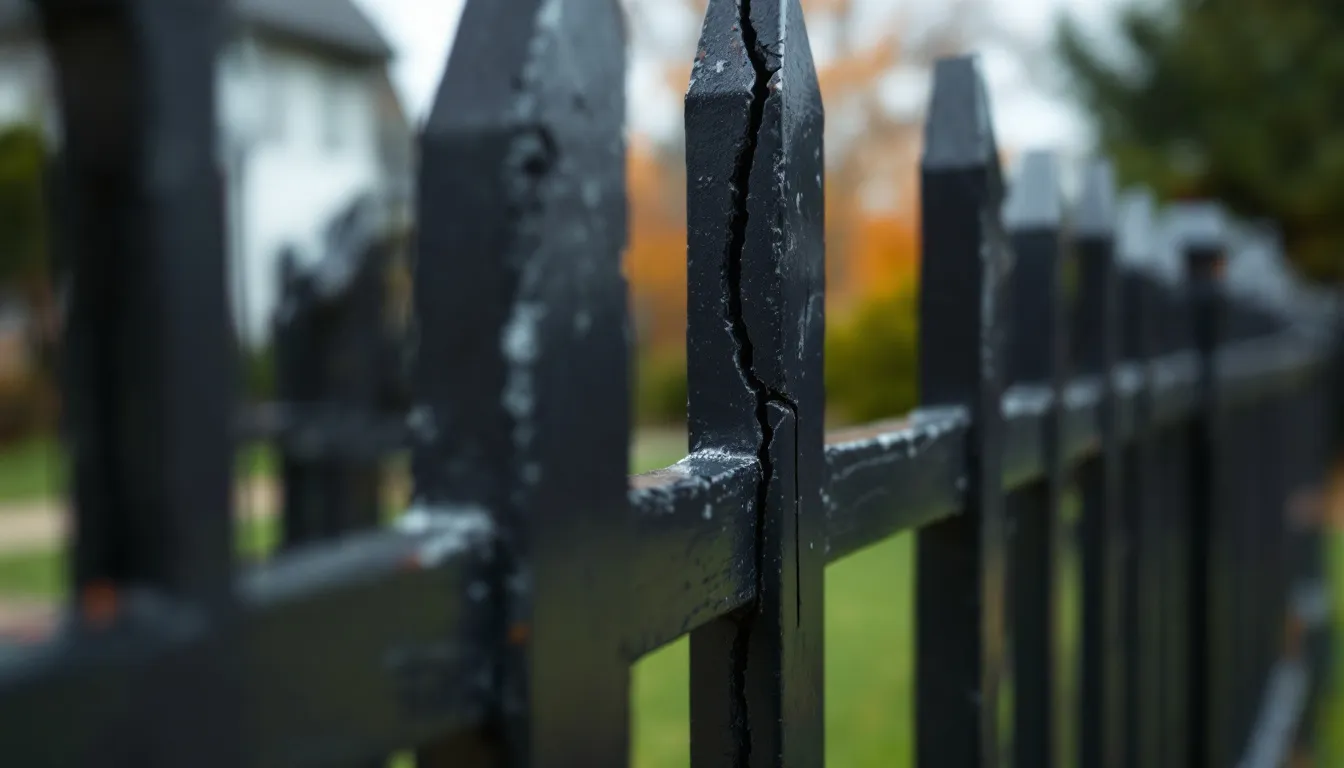
Telltale Signs
Warning Signs to Watch For
- A fence picket is visibly bowed outward or inward compared to the ones beside it
- Small cracks are visible where a picket meets the top or bottom rail
- A picket has come completely loose and shifts when you touch it
- The panel looks wavy or rippled when you look down the fence line
- Paint or powder coating has bubbled or peeled along a rail or weld point
- The gap between panels at a corner has widened noticeably
Root Causes
What Causes Aluminum Fence Panels Warping or Cracking?
Thermal Expansion from Heat
Aluminum expands about 0.13 inches for every 10 feet of length for every 18 degrees Fahrenheit of temperature rise. In Coral Springs, a black powder-coated fence can swing from 75 degrees at night to over 130 degrees in direct afternoon sun. That repeated expansion and contraction stresses the welds at every picket joint.
The Fix
Panel Replacement with Proper Expansion Gaps
We replace the warped panel and install it with the correct expansion gap between the panel end and the post bracket. That small gap gives the metal room to move without cracking.
Impact Damage from Lawn Equipment
String trimmers and mower decks hit aluminum pickets at the base all the time. Aluminum is light but brittle at thin cross-sections, and a single hit from a mower blade can crack a picket or knock a weld loose. We see this constantly in HOA communities in the Wyndham Lakes area where maintenance crews work fast.
The Fix
Individual Picket or Panel Repair
If only one or two pickets are cracked, we can often replace just those pickets rather than the whole panel. If the rail itself is bent, the panel needs to come out and be replaced entirely.
Poor Quality Alloy or Thin Gauge Material
Not all aluminum fence is the same thickness. Thinner gauge material, sometimes sold at big box stores, uses less metal per picket and welds that are smaller and weaker. In Coral Springs heat and humidity those thin welds fail within 3 to 5 years, where a commercial grade panel would last much longer.
The Fix
Upgrade to Commercial Grade Panel
We remove the failing panels and replace them with heavier gauge aluminum with fully welded construction. The thicker metal handles heat stress better and the stronger welds don't crack as easily.
Self-Diagnosis
Which Cause Applies to You?
Check the signs you're observing to narrow down the likely root cause before your inspection.
| What You're Seeing | Thermal Expansion from Heat | Impact Damage from Lawn Equipment | Poor Quality Alloy or Thin Gauge Material |
|---|---|---|---|
| Cracks visible at weld points where pickets meet rails | |||
| Single picket cracked near the base with chipped paint nearby | |||
| Whole panel looks wavy along a sun-facing run | |||
| Multiple welds failing on panels less than 5 years old | |||
| Damage is concentrated near the gate opening where mowers turn |
Free Quote
Get a free quote in Coral Springs
No obligation — tell us what's going on and we'll text you back shortly.
Other Problems
Services That Fix This
Aluminum Fence Panels Warping or Cracking Near You
Also Helpful